Innovative Technologies in Thread Rolling for Swiss Screw Machining
Understanding Thread Rolling Technologies
Overview of Thread Rolling
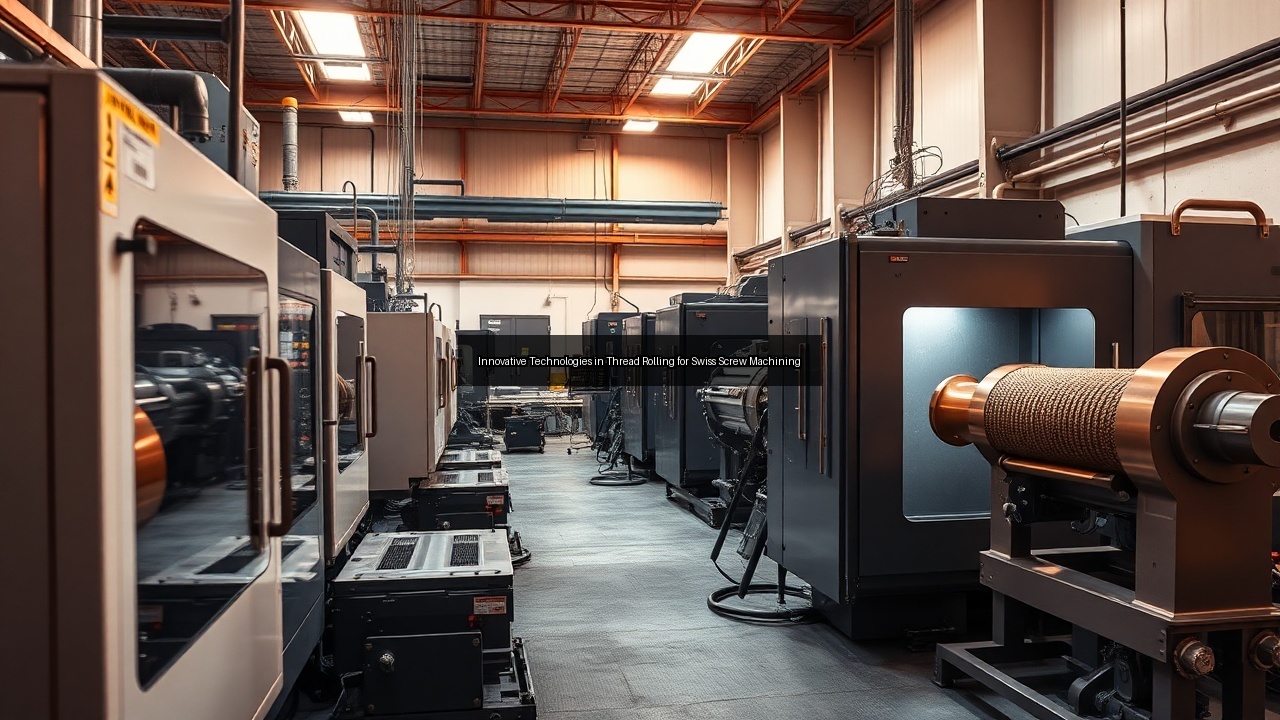
Thread rolling forms precise threads on metal parts through plastic deformation rather than material removal. In swiss screw machining operations, manufacturers feed wire or bar stock into specialized machines that press dies against the rotating workpiece. This process creates strong threads on fasteners and components used across demanding sectors. Swiss screw machining centers in Wisconsin integrate thread rolling directly into production cycles, allowing complex geometries on small-diameter parts without secondary operations. The method handles various metals including stainless steel, titanium, and alloys that resist traditional cutting. Operators monitor parameters such as feed rate and die pressure to maintain consistent thread profiles. Thread rolling services combine this technique with cnc controls to achieve tolerances that meet aerospace and medical standards. Modern setups also incorporate knurling or grinding steps when parts require additional surface features.
Benefits of Thread Rolling in Manufacturing
Thread rolling strengthens the grain structure of metals along the thread flanks, increasing fatigue resistance and tensile strength compared with cut threads. Manufacturers gain higher production rates because the process completes threads in one pass on cnc machines. Swiss screw machining benefits from reduced scrap since no chips form during threading. The resulting surface finish often eliminates the need for extra polishing or thread milling. Fasteners produced this way exhibit superior resistance to vibration loosening, a critical advantage in military and oil and gas equipment. Thread rolling services also support high-volume runs of screw machined parts while maintaining tight dimensional control. Integration with cnc machining allows quick changeovers between different thread sizes without extensive tooling changes. Overall, the method lowers per-part costs and improves part longevity across multiple industries.
Comparison: Thread Rolling vs. Other Threading Methods
Thread rolling differs from thread milling and traditional tapping because it displaces material instead of removing it. Cut threads from cnc milling or grinding leave interrupted grain flow that reduces strength, whereas rolled threads maintain continuous fibers. In swiss screw machining, rolling achieves finer surface finishes without the burrs common in thread milling. Manufacturers select rolling for high-strength fasteners destined for aerospace and military applications where failure is unacceptable. Thread casting technologies offer an alternative for very large diameters but lack the precision required for small screw machined components. Wire edm provides exceptional accuracy on hard metals yet remains slower and more expensive for production volumes. Thread rolling services therefore deliver the best balance of speed, strength, and cost when processing common fastener sizes in aluminum, steel, and exotic alloys.
Applications of Thread Rolling in Swiss Screw Machining
Role of Thread Rolling in Aerospace Manufacturing
Aerospace manufacturers rely on thread rolling services to produce lightweight yet durable fasteners that secure critical airframe and engine assemblies. Swiss screw machining platforms equipped with rolling heads create threads on titanium and Inconel parts that must withstand extreme temperatures and cyclic loads. The process yields threads with superior fatigue life, reducing inspection intervals and maintenance costs for aircraft operators. Engineers specify rolled threads on hydraulic fittings and control linkages because the compressive residual stresses resist crack initiation. Thread rolling services working with aerospace clients maintain AS9100 certification and document every production lot for traceability. Integration of cnc controls ensures each batch meets exact pitch diameters and lead angles required by OEM drawings. The combination of swiss screw machining precision and thread rolling strength supports weight-reduction initiatives without compromising safety margins.
Thread Rolling for Military Fasteners
Military contractors demand thread rolling services that deliver consistent performance under harsh field conditions. Swiss screw machining produces small, high-precision fasteners for weapons systems, vehicles, and communication equipment. Rolled threads on these parts resist stripping during repeated assembly and disassembly cycles common in maintenance operations. Manufacturers in Wisconsin often run dedicated cells for military work, applying strict process controls and first-article inspections. Thread rolling also accommodates special thread forms such as buttress or acme profiles used in artillery mechanisms. The absence of cut marks improves corrosion resistance when parts receive subsequent coatings. Thread rolling services maintain inventory of common military-grade materials and offer quick turnaround for urgent replenishment orders. This capability supports defense supply chains that require both quality and schedule reliability.
Impact of Thread Rolling in Oil and Gas Industries
Oil and gas equipment operates in high-pressure, corrosive environments where fastener failure can cause costly downtime or safety incidents. Thread rolling services produce robust threads on valve stems, wellhead components, and drill-string hardware. Swiss screw machining allows manufacturers to create these parts from corrosion-resistant alloys while maintaining exact thread geometry. Rolled threads exhibit better sealing performance when mated with gaskets or metal-to-metal seals. Manufacturers combine thread rolling with edm machining to add complex porting or slots after the rolling operation. Thread rolling services serving this sector stock extensive raw material inventory to respond rapidly to exploration and production schedules. The resulting fasteners maintain integrity across temperature cycles and vibration levels typical of offshore platforms and refineries.
Innovations in Thread Rolling Techniques
Advancements in CNC Thread Rolling
Modern cnc thread rolling machines incorporate servo-driven dies and real-time force monitoring that adjust parameters on the fly. Swiss screw machining centers now link these rolling heads directly to the main spindle, eliminating separate setups. Operators program thread specifications through familiar cnc interfaces, reducing setup time and operator error. Thread rolling services leverage this technology to run mixed batches of fasteners with minimal downtime between jobs. Advanced models also integrate automatic die lubrication and chip evacuation systems that extend tool life. Manufacturers achieve higher spindle speeds and feed rates while preserving thread quality across a wide range of metals. The result is faster throughput and greater flexibility for contract shops handling aerospace, military, and industrial orders.
Integration of EDM in Thread Rolling Processes
Wire edm and edm machining complement thread rolling when parts require intricate features impossible to roll alone. Manufacturers first roll primary threads on swiss screw machines, then use wire edm to add undercuts, keyways, or cross-holes. This hybrid approach maintains the strength benefits of rolled threads while achieving complex geometries demanded by specialized fasteners. Thread rolling services equipped with both technologies reduce lead times by keeping all operations in-house. Precise edm electrodes allow accurate thread reliefs without disturbing the rolled flank surfaces. Aerospace and oil and gas clients particularly value this capability for components that must interface with non-standard mating parts. The combination expands design possibilities while preserving the mechanical advantages of thread rolling.
The Future of Thread Casting Technologies
Thread casting technologies continue to evolve alongside traditional rolling methods, particularly for large-diameter or low-volume applications. Researchers explore hybrid processes that combine initial casting of thread profiles with subsequent rolling passes for refinement. Swiss screw machining manufacturers monitor these developments to determine when new methods become viable for smaller components. Thread rolling services already experiment with programmable die textures that impart micro-features during the rolling operation. Future machines may incorporate in-process sensing and machine learning to predict and correct thread variations before parts leave the machine. These advances promise further gains in consistency and material utilization across all sectors that rely on high-performance fasteners.
Challenges and Solutions in Thread Rolling Services
Common Issues Faced in Thread Rolling
Thread rolling services encounter challenges such as die wear, material spring-back, and inconsistent thread fill on work-hardening alloys. Swiss screw machining of thin-walled parts can also produce distortion if rolling pressures exceed part rigidity. Manufacturers sometimes observe thread flank tearing when lubrication fails or when stock chemistry varies between lots. Military and aerospace specifications impose strict limits on surface discontinuities that require additional inspection steps. Thread rolling on cnc machines demands precise alignment of dies to avoid lead errors that affect fastener interchangeability. Oil and gas components machined from exotic metals present further difficulties because of their high strength and low thermal conductivity. Addressing these issues requires both process expertise and appropriate equipment investments.
Effective Solutions for Threading Problems
Experienced thread rolling services combat die wear through scheduled inspections and premium tool coatings. They adjust rolling speeds and lubrication formulations to match specific metals processed on swiss screw machines. When spring-back occurs, operators modify die designs or add corrective sizing passes. Thread rolling services maintain detailed process sheets that record parameters for each material and thread size, enabling rapid troubleshooting. Integration of in-process gauging on cnc equipment allows immediate detection of out-of-tolerance threads. For challenging alloys, manufacturers may combine thread rolling with selective grinding to achieve final dimensions. These practical solutions keep production running smoothly while meeting stringent customer requirements.
Quality Control in Thread Rolling Operations
Quality control begins with incoming material certification and continues through every stage of swiss screw machining and thread rolling. Thread rolling services employ thread ring gauges, optical comparators, and coordinate measuring machines to verify pitch diameter, flank angle, and lead accuracy. Statistical process control tracks variation across production runs and triggers corrective action when trends appear. Aerospace and military contracts often require first-article inspection reports and ongoing lot sampling. Thread rolling services that serve oil and gas clients add hardness testing and surface-finish verification to their protocols. Documentation of all measurements supports traceability demanded by regulated industries. Consistent quality control protects both manufacturers and end users from premature fastener failure.
Choosing the Right Thread Rolling Service Provider
Key Factors to Consider When Selecting a Manufacturer
Buyers evaluating thread rolling services should examine the provider’s experience with swiss screw machining and the range of metals it routinely processes. A capable manufacturer maintains modern cnc equipment and holds relevant quality certifications for aerospace, military, or oil and gas work. Lead time reliability and capacity for both prototype and production volumes matter when project schedules tighten. Thread rolling services that stock extensive raw material inventory reduce delays associated with special-order bar stock. Technical support during design reviews helps customers optimize thread specifications for manufacturability. Location can also influence logistics; Wisconsin-based providers often serve Midwest manufacturers with faster shipping. Clear communication and responsive quoting separate top-tier suppliers from average ones.
Evaluating Inventory and Capabilities
Strong thread rolling services maintain broad inventory of common fastener materials and sizes to support quick-turn orders. They also offer secondary operations such as knurling, grinding, and edm machining under one roof. Swiss screw machining capabilities should include multi-axis cnc centers that handle complex parts without multiple setups. Manufacturers with in-house thread rolling reduce handling and potential damage between operations. Buyers should request capability lists that detail maximum and minimum thread diameters, pitch ranges, and material hardness limits. The ability to process both standard and special thread forms, including left-hand threads, expands application possibilities. Thorough evaluation of these factors ensures the chosen provider can meet current and future production needs.
The Importance of Technology in Thread Rolling Services
Technology investment separates leading thread rolling services from competitors. Advanced cnc controls, servo-driven rolling heads, and integrated inspection systems deliver repeatable results at high speed. Manufacturers using wire edm alongside thread rolling expand the complexity of parts they can produce on swiss screw machines. Real-time monitoring software tracks machine performance and alerts operators to deviations before defects occur. Thread rolling services that adopt these tools improve both quality and throughput while controlling costs. Customers benefit from shorter lead times and fewer quality escapes. As fastener requirements grow more demanding across aerospace, military, and energy sectors, technology-equipped providers remain best positioned to deliver reliable, high-performance components.
See Also
- From CNC to Thread Rolling The Evolution of Thread Production Techniques
- The Art of Thread Rolling How Modern Machines Shape Metal Threads
- Unlocking Precision with Thread Rolling Services for Aerospace Applications
- The Future of Manufacturing How Thread Rolling Enhances Metal Fasteners
- Exploring the Benefits of Thread Rolling in Military Equipment Production