Transforming Industries with Customized Synchronous Motors
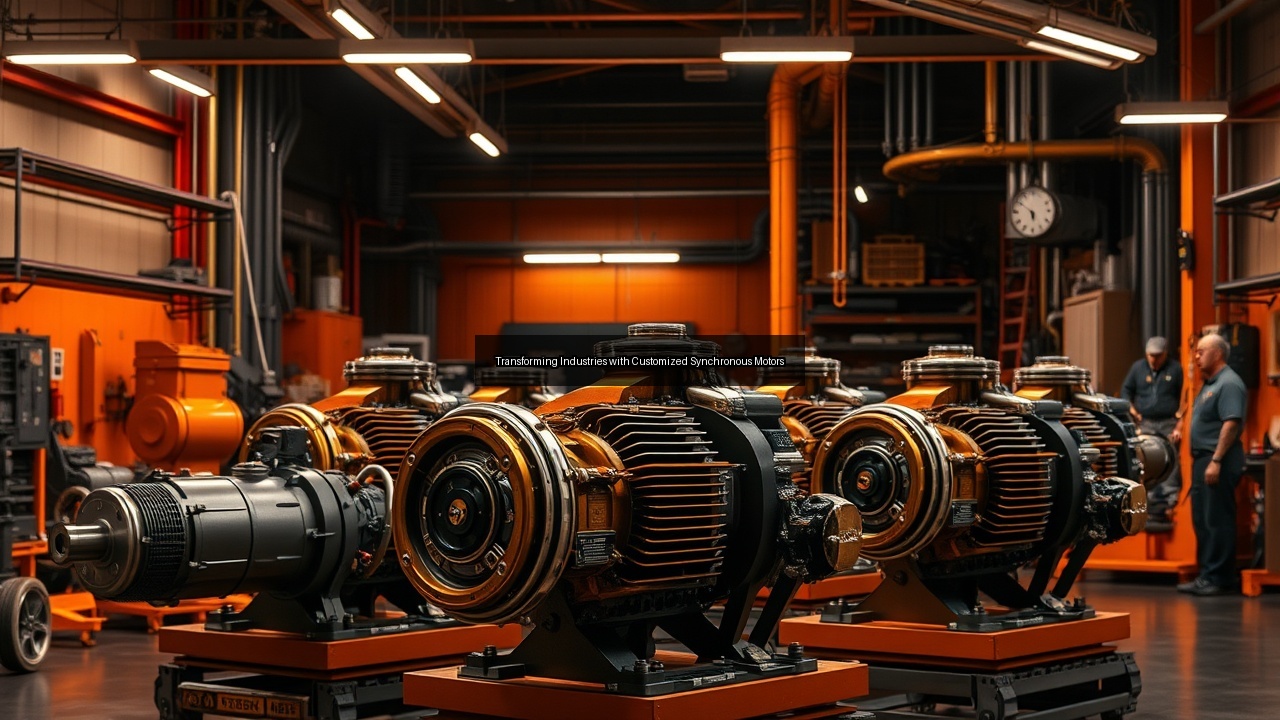
The Rise of Customized Synchronous Motors in Various Industries
Understanding Synchronous Motors
Synchronous motors operate at a constant speed, regardless of the load, making them an ideal choice for applications requiring precision and reliability. These motors synchronize with the frequency of the alternating current (AC) supply, ensuring they maintain a fixed relationship with the supply frequency. Unlike direct current (DC) motors, synchronous motors offer higher efficiency and better performance in specific applications. They come in various designs, including permanent magnet synchronous motors and reluctance motors, each tailored to meet distinct operational needs. Custom motors enhance these capabilities, offering unique specifications that align with the demands of different industries. This adaptability significantly boosts productivity and operational efficiency, establishing synchronous motors as crucial components in modern industrial applications.
Advantages of Custom Motors Over Standard Options
Standard motors serve numerous applications, but custom motors provide distinct advantages that can transform industrial processes. Custom motors are designed to meet precise specifications, offering tailored solutions for unique operational requirements. This customization allows for improved performance, efficiency, and reliability. Industries benefit from enhanced torque characteristics, load handling, and energy savings, which standard motors often cannot provide. The integration of advanced materials and technology into custom motors results in lighter, more durable options that reduce wear and tear, ultimately lowering maintenance costs. Additionally, the ability to optimize size and weight ensures that custom motors fit seamlessly into existing systems, minimizing installation challenges and downtime. These tailored designs allow industries, such as manufacturing and transportation, to achieve higher productivity and operational excellence.
Industries Transforming with Custom Electric Motors
Various industries are experiencing significant transformations thanks to custom electric motors. The manufacturing sector, in particular, benefits from the precision engineering capabilities of customized synchronous motors. These motors enhance automation processes, ensuring machines operate smoothly and efficiently. The automotive industry increasingly relies on custom motors for electric vehicles (EVs) and hybrid technologies, where torque and efficiency are paramount. Trucks and heavy-duty vehicles also employ custom motors to improve fuel efficiency and reduce emissions. The renewable energy sector utilizes customized generators to harness wind and solar power effectively. Each application highlights the versatility of custom motors, making them indispensable for modern industry needs. As customization becomes more prevalent, companies can expect to see continued advancements and improvements across all sectors.
Applications and Benefits of Custom Motors
Precision Engineering in Manufacturing
Precision engineering is vital for the manufacturing sector, where even minor inaccuracies can lead to significant production losses. Custom motors play a crucial role in this domain by providing the exact specifications required for specific applications. For instance, servo motors, known for their precise control and feedback capabilities, are often customized to meet the exact torque and speed requirements of particular machines. This level of customization ensures that manufacturing processes operate at peak efficiency, reducing waste and improving product quality. Moreover, the integration of custom electric motors into assembly lines enhances automation, allowing for faster production rates without compromising quality. As manufacturing processes become more sophisticated, the demand for custom motors will only grow, driving innovation and pushing the boundaries of what is possible in precision engineering.
Enhancing Efficiency in Electric and DC Motors
Custom motors significantly enhance the efficiency of both electric and DC motors. Tailored designs enable engineers to optimize motor performance for specific tasks, resulting in lower energy consumption and improved operational efficiency. For electric motors, custom solutions can address challenges like heat dissipation and electromagnetic interference, which often hinder performance. In the case of DC motors, customization can improve torque characteristics and response times, making them ideal for applications requiring rapid acceleration or deceleration. The ability to adjust winding configurations, material types, and motor dimensions leads to superior performance that meets the stringent demands of modern applications. As industries continue to prioritize energy efficiency and sustainability, custom motors will play an essential role in achieving these goals.
The Role of Brushless DC and Induction Motors in Custom Solutions
Brushless DC (BLDC) motors and induction motors represent two critical components in the realm of custom motor solutions. BLDC motors offer high efficiency and reliability, making them suitable for applications ranging from consumer electronics to industrial machinery. Their lack of brushes reduces maintenance needs, extending the lifespan of the motor and enhancing overall performance. Customization allows engineers to fine-tune these motors for specific torque and speed requirements, further increasing their effectiveness in any application. Induction motors, on the other hand, are widely used in industrial settings due to their robustness and simplicity. Custom induction motors can be designed to operate under unique load conditions, ensuring that they deliver optimal performance tailored to specific operational contexts. Together, these motors highlight the diversity and adaptability of custom motor solutions in modern applications.
Future Trends in Custom Motor Development
Integration of Smart Technologies in Custom Motors
The integration of smart technologies into custom motor designs is a prominent trend shaping the future of motor development. Incorporating sensors and IoT technology allows for real-time monitoring and data collection, providing manufacturers with valuable insights into motor performance and efficiency. These smart motors can self-diagnose issues, predict maintenance needs, and optimize performance based on dynamic operating conditions. As industries increasingly adopt automation and smart manufacturing processes, the demand for these advanced custom motors will surge. The ability to remotely monitor and control motors not only enhances operational efficiency but also supports predictive maintenance strategies, reducing downtime and maintenance costs. As technology continues to evolve, the future of custom motors looks promising, driven by innovation and the need for enhanced performance.
Sustainability and Eco-Friendly Custom Electric Motors
Sustainability remains a crucial focus for industries worldwide, and custom electric motors are at the forefront of this movement. Manufacturers are increasingly prioritizing eco-friendly designs that minimize energy consumption and reduce carbon footprints. Custom motors can be engineered using sustainable materials and processes, contributing to greener manufacturing practices. Additionally, the development of energy-efficient motors aligns with global initiatives aimed at reducing greenhouse gas emissions. Custom solutions that optimize energy efficiency not only benefit the environment but also help companies cut operational costs. As the demand for sustainable practices grows, custom electric motors will evolve to meet these challenges, ensuring that industries can operate responsibly while maintaining efficiency and productivity.
Challenges in Manufacturing and Inventory Management for Custom Motors
While the benefits of custom motors are significant, challenges in manufacturing and inventory management persist. Custom motor production often involves complex design processes that require skilled labor and advanced technology, leading to longer lead times compared to standard motors. Manufacturers must balance the need for customization with efficient production practices to ensure timely delivery. Additionally, inventory management poses a unique challenge. Custom motors, being tailored to specific requirements, often result in lower production volumes, making it harder to maintain stock levels. Companies must develop strategies to manage inventory effectively, including just-in-time manufacturing and demand forecasting. Overcoming these challenges will be critical for companies looking to capitalize on the growing demand for custom motors while maintaining operational efficiency.